Switzerland itinerary

DSC_0600Where to start in this land of sweeping natural beauty? With limited time and so many ‘must sees’, I relied heavily on top 10 recommendations. But even wading through that was difficult. See below for how we made the most of our 10 days in this stunning country.

Where to start?  Go in the summer and head to the alps

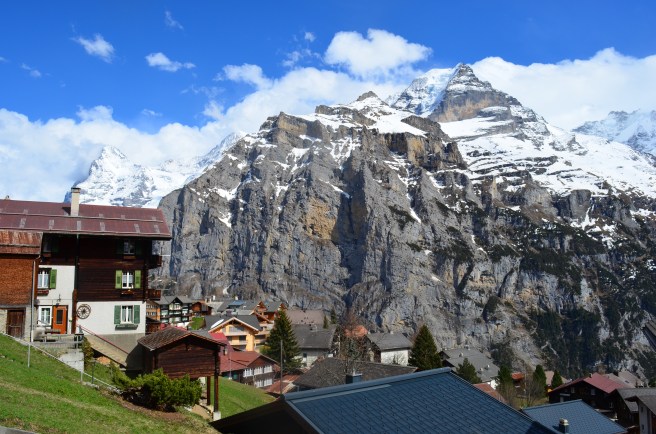
The Alps stretch over much of the country and there are various famous walks, and ski villages (winter is of course another key time to go). Trekking across the Alps is on my bucket list, but without a few weeks to explore it was difficult to pick a region to focus on. Out of all the areas to stay I recommend picking either  Grindelwald or Lauterbrunnen in the Bernese Oberland. More particularly, you should focus on the Jungfrau Region

Interlocken is a favorite among backpackers, but largely touristy. Grindelwald and Lauterbrunnen are the last two towns you can get to by car; the remaining movement must be done via public transport or foot. If you are looking for something more off the beaten track then Murren or Wengen are your go to places. We had a car (cheaper than taking the train, but not necessarily easier) so Lauterbrunnen was our first choice.

Schützenbach Backpackers & Camping  Schützenbach, Lauterbrunnen, 3822, Switzerland

*Cheap, clean and central this large ground is ideal for large groups. Check-in time is  limited so make sure you arrive within their window
DSC_0309

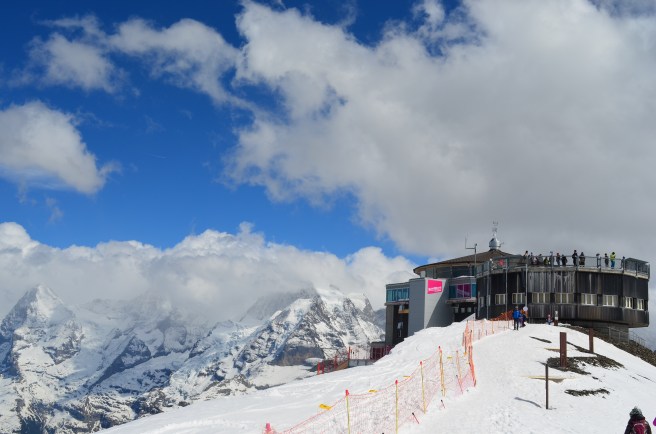
Day 1: Gondola up to Schilthorn, have a rest at Piz Gloria and hike back down

Have your Shaken Not Stirred Martini at the Piz Gloria, home of the 1969 Bond film Her Majesty’s Secret Service then walk it all off on the way down the mountain side. This trip can be done in a day. Recommend making reservations at the restaurant to guarantee placement; you will not regret the views.

DSC_0404

Day 2: Travel up to Jungfraujoch – Top of Europe

This leg for us was the most touristy and way overpriced, but at the same time a must do for anyone claiming to have visited the Swiss Alps.

Day 3+: Complete the classic First – Schynige Platte hike

If you choose any hike in the Bernese Oberland region, this is an absolute must. There are loads of ways to break the 10m hike down to something shorter, but the full walk is something not to be skipped. For all those that are as concerned as I am about reading confusing elevation, hiking maps fear not – all trails are well marked and extremely easy to follow. This region was made for tourists.

Note: Getting a train Travel Pass is absolutely worth it if you will be staying in the region for 3 days or more. It is only eligible for certain times of the year however, so a secondary option is to buy the 50% ticket which discounts your pricy train travel as well.

You could spend weeks in this region of Switzerland and still not get enough. The views are jaw dropping, the air is clear and the people wonderful. If you have time, plan at least a week in this area and do a few more extensive trips – maybe even an overnight in one of the well maintained huts along the alps. You will not regret it. If you are limited on time as I was, then hitting these top 3 will at least get you the experience of the alps.
DSC_0313

After the Alps, head to the Swiss Rivera with a key stop at Gruyere for some of the local delicacy as well as a taste of Switzerland’s national dish: fondue.

Day 4: Gruyere

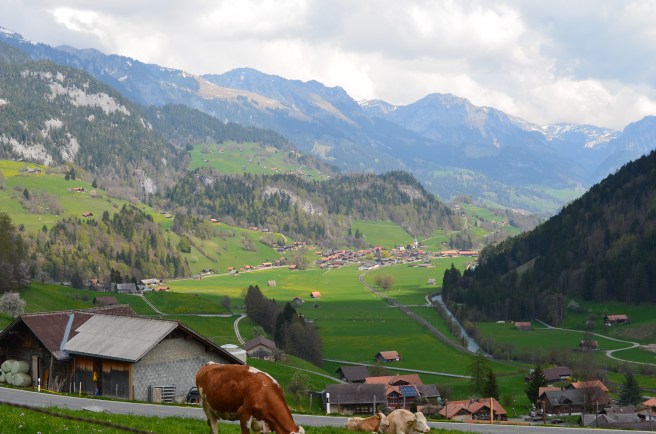
If you have time I would stay at least 1 night in the town of Gruyere. Home to not only the famous cheese, but a gorgeous medieval town set on the hillside in the middle of sprawling green hills.

DSC_0657

Day 5: Montreux, Chillon Castle and wine

You can stay on many little towns and villages along Lake Geneva. We chose the biggest of the cities, Montreux. Famous for its immaculate promenade, I chose a hotel that had views of the lake, and was within walking distance of Chillon Castle. A must when staying here is to walk the promenade to this ancient castle set on the backdrop of the Alps.

Golf Hotel Rene Capt, Rue Bon Port 33-35, Montreux, 1820, Switzerland

If you can time your trip around July, the famous Montreux Jazz festival fills this Rivera town with life. Though it is not a stranger to famous artists; Queen famously made this town a home where they recorded a majority of their albums along with a number of other famous guest artists including David Bowie.

Swiss wine is less known than chocolate or cheese yet it can compete with its neighboring France and Germany for crisp whites. If you have time, explore the promenade and add a wine excursion to your list of Must Do’s.

Day 6: Geneva and CERN

More international than Swiss, Geneva is home to the UN and boasts CERN – a cutting edge laboratory famous for its discovery of the ‘God particle’. Those physics enthusiasts will want to take a tour of the facility, though book in advance as it fills up quickly.

To round out the trip, circle around the edge  of the country ending up in the gorgeous town of Lucerne

St. Mortiz

Home of the best skiing/winter sports in the world, it is just as gorgeous in the summer months. Being in the Southern part of the country and close to Italy, I had to cut this city out though winter sports enthusiasts might not make the same call. I would say if you are short on time and looking for an Alpine adventure, Jungfrau is the most central location to base the remaining part of your trip
DSC_0450

Zurich vs. St. Gallen

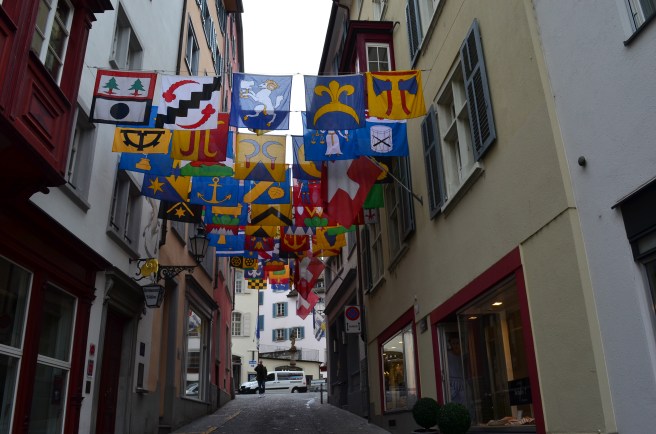
We stayed in Zurich and hit the Lindt chocolate outlet along with a few guild festivals. Unless you are in love with cities, I would skip Zurich and stay instead in the ancient town of St. Gallen. Close to the German/Lichtenstein border the ancient town is significantly less expensive and is steeped in history. From there you can bounce to Rhine Falls , the largest waterfall in Europe. Though anyone who has marveled at the likes of Niagara or Victoria falls might want to skip this modest show of nature.
DSC_0554

Lucerne

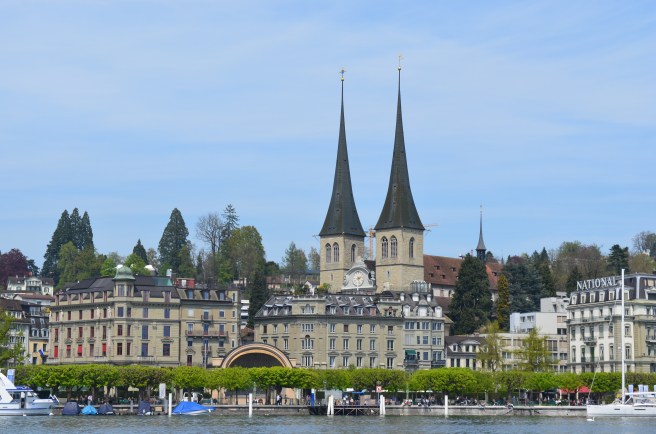
If you make it to the Bernese Oberland, Lucerene is an easy addition to your trip. Boasting a series of cable car musts it is also another ancient city steeped in history. Take the paddle boat ride through the lake, explore the nine towers of Lucerne, and learn about how the order of the guild used to run the country (and in some cases still does).


No matter where you choose to go in this gorgeous country you cannot go wrong. Put on your hiking boots, bring your cash and breath the fresh Alpine air!


Military Service: Now & Then

Memorial Day

Today is my 8 year anniversary in service to the United States Air Force. This year, unlike years prior, the concept of service resonates much differently as I gain tenure in the military.

Eight years looks a lot different than 2 or 3 years. When I first joined, all I wanted was to see action, feel adventure, and see the world. And I did. I met fellow young Americans desiring to do the same thing. Some had cooler/risker jobs than me, ones that weren’t considered ‘support’ career fields like mine and although I had some sweet advantages in my own line of work, I couldn’t help but feel a twinge of guilt that I somehow wasn’t trying or giving hard enough. We all took our first deployments, many of us are now married and some have already met their first born child.

momunment

Somewhere along the way this oath I made to the United States Air Force became real. It wasn’t just a way to pay for college, a way to see the world, a way to seek adventure. It gave me all those things, but also came with real life sacrifice; separation from the ones we love and temptation to break the oaths we had made to each other.

Having returned from my first 6 month stint, I spent two weeks in Alabama at a core course for my career field. I looked around the room of people who were my peers in age, job and grade — and yet we all had different stories to tell. Convoy duty in Afghanistan, suicide saves, PTSD and the stigma of saying ‘enough is enough.’

When I myself look at my US cell phone, now 5 years out of date, I had to delete to friends, pilots who have died. In the age of social media it is still difficult to grasp their death – their faces frequently appear on my news feed. They are tagged in posts by other friends, and most often, by their all too young widowed spouse. If I were to go back to 2dLt me and tell her how real military service would get, I think she would have smiled, knowingly, said ‘bring it on’.

And yet as I look back into the recent history of war, the loss that I feel, that my peers feel, nothing compares to those that came before us.

isolated

Normandy

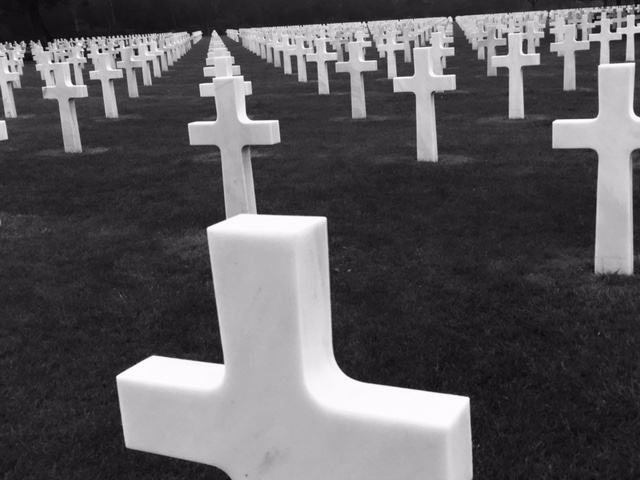
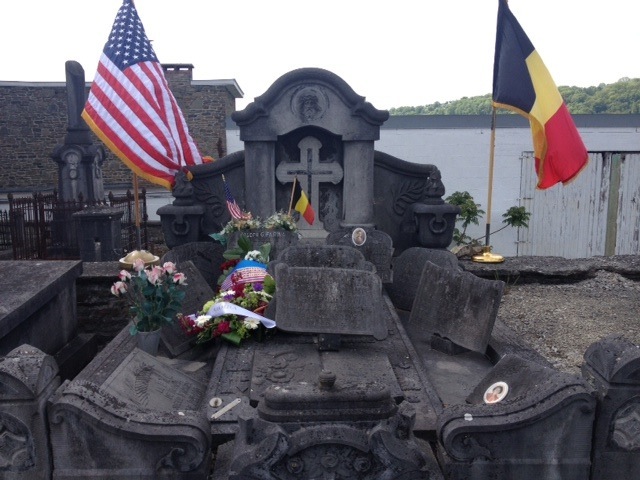
I had the honor of not only being able to visit Normandy over Memorial Day weekend, but to participate in a few isolated grave ceremonies. These American men that fought alongside the allies during WWI and WWII are still remembered in small town ceremonies. It is amazing to see how Europe remembers the war; everyone from the local villages still come out to pay homage to people who died over 60 years ago. To witness, let alone be a part of this level of remembrance was a huge honor and humbling to say the least.

Yet, this was not the only humbling part. In addition to these veteran ceremonies, I was also able to take a full tour of Normandy.

omah

Standing on Omaha beach, looking out into the sea, I tried to imagine not only what it would have been like being the man running up through relentless gunfire with less than 40% survival odds – but to be the person that planned the attack. Eisenhower had to not only plan with coalition forces, but had to pull together all factors of the US military. Naval considerations, a sea to land invasion, air war – with an air force that wasn’t even an independent service at this point! All this and they were coming from England to terrain that while researched, only was partly understood. To plan for this also knowing that you had so many lives in your hands – that is a burden we do not often think about, nor can we truly fathom.

Warfare has so drastically changed from the days of WWII. When I think about the struggle of planning for an invasion of this scale compared to the messy, blurred lines of the war on terror that the world is now engulfed in, I almost envy the simplicity of it all.

To fight a clear enemy, one that had an identifiable standing force without the existence of social media, lone wolf attacks and beheadings – it seems like an easy war to win. Of course, this being hindsight rather than 1943, I wonder if the people of the future will look the same on our current conflict.

The war we are now waging sees less lives taken, but more lives affected. Nowhere have I witnessed the effects of this new war than living in Belgium (and not the Middle East).

Brussels Terrorist attack

_88905343_gettyimages-498324288-2

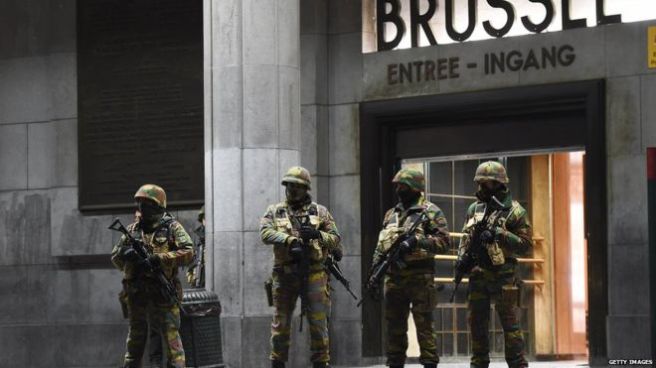
Many would have heard about the Brussels airport and train station bombing on March 22, 2016, some might have frequently passed through the airport as a means for travel or have called the city home. Few, however, were at the airport on the day of the attacks, had to account for and care for the casualties of the event.

In what will forever be burned into my memory as unprecedented chaos, the 72hours following the Brussels attack served as a test of accountability, leadership under pressure and taking care of our fellow service members.

My sisters were due to fly into Brussels airport on the day of the attack. I was prepping to take Easter leave with them in Lithuania; my mind was focused on getting out as quickly as possible. At about 0900 on 22 March we got word that the airport had been bombed; knowing that I had a number of personnel that lived and planned on traveling through that area, we initiated a 100% recall of all personnel. After accounting for all my military, I learned that my sister’s flight had also been diverted – all that I had personal responsibility for were accounted for and deemed safe.

Then, I learned that another Air Force family had been hit while attempting to travel back to the United States and being the closes Air Force commander, had been called to go to the hospital to go assist.

Fog of war became a new term that I understood; Belgian authorities were struggling to identify all the wounded, information was filtered through 3 different languages and I, being neither next of kin or medical personnel, had to negotiate my way in to a foreign hospital to feed information to Washington that had now become acutely aware of the situation. I was able to use both interpersonal skills as well as a fellow military bond to make sense of the situation, locate the additional missing service member and connect them to the appropriate lines of care.

Those 72 hours of response still seem like a sleepless blur. Belgian authorities pulled 36 hour straight shifts; initially they had over 100 injured, unidentified, international personnel. Getting medical information to identify these personnel, as well as filtering key information about these personnel ahead of the social media spin and in protection of the families affected, proved a telling task; one that I believe was accomplished successfully in spite of the shock and aww.

The World War today

As I watch, read and listen to the media; as I experience the war that is being written about; as I get thanked for my service; as I travel, survey the land, and reflect — the world seems to be more chaotic, while still being more connected than ever before.

We no longer fight states or declare war on a clear enemy; instead we declare war on an ideology that will stop at nothing to be spread. We wage war using bombs and fire arms without understanding how to wage war on the more difficult enemy –belief, survival and fear.

I do not envy Eisenhower nor do I think WWII was any easier than the conflict we face today, although it seems simpler. I doubt he or any great military leader could have predicted the wars of the future. I only hope that we will be able to look back on this time in history, to remember the fallen as we have over this memorial day weekend and say –

‘never again’.


48 hours in Doha

DSC_2694

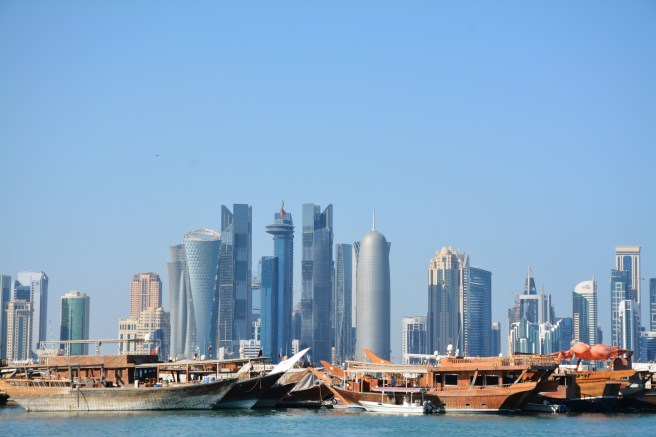
My time in Doha is now coming to an end. It has been quite the ride of new experiences and challenges; I am very much looking forward to seeing something besides brown sand, returning to Europe and not sweating the instant I walk outside. After 6 months here, I can safely give a review of the country as well as recommend where to go.

Firstly, if you think you are going to have this wild cultural experience in the country, think again. As far as I can tell, the country only just started to exist in the last 10-20 years and in fact has changed so drastically over that time, it is barely recognizable. Prior to gaining its independence from Britain in the 1970s, Qatar had little in the way of infrastructure or wealth, subsiding on a mostly Bedouin, nomadic culture. They have tried very hard to bring their society up to a modern standard – and in doing so quickly, there is little left in the way of Bedouin roots (at least for the non-Arab outside traveler).

This does not mean that Doha is not worth the trip as one can still experience a modern Middle Eastern culture; one that is completely safe and open to westerners, working its way to compete with neighboring giants of Dubai, Abu Dhabi and Bahrain.

Doha Top 5 experiences:

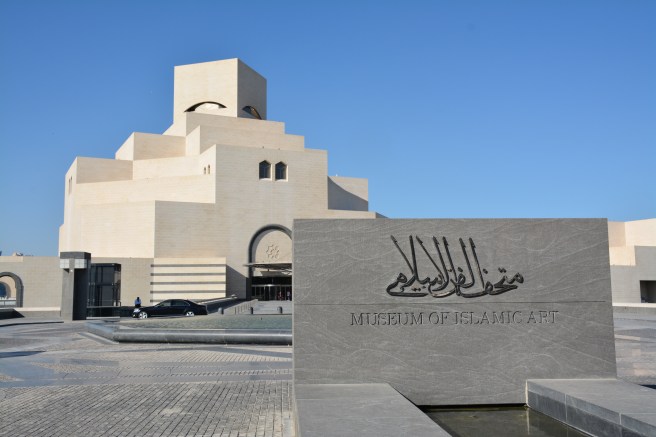
1 – Islamic Museum of Art – This museum has been named one of the modern wonders of the world. This is truly the jewel of Doha – the most extensive, progressive art collection in the entire Middle East sits on the waters of Doha. Even not being particularly keen museum or art person, it is more than worth a visit.

http://www.mia.org.qa/en/

DSC_2749

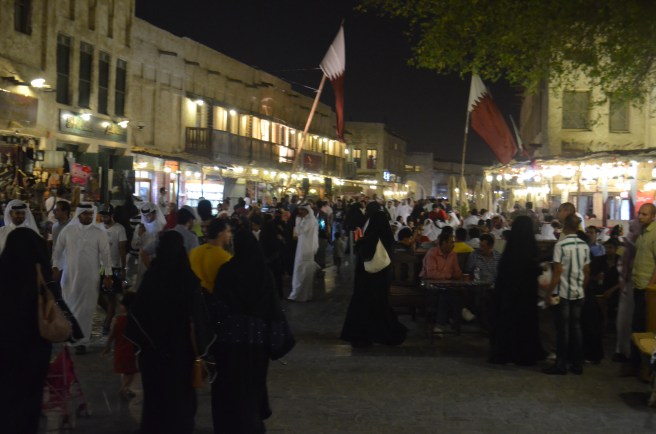
2 – The Souqs – Completely rebuilt, the complex of waiving shops still takes you back into a world of old Arabia (which feels like something out of Aladdin). The best part – it’s not just made for western tourists and expats, locals also do much of their shopping there, including custom made thobes and abayas.

http://www.souq-waqif-doha.com/

https://en.wikipedia.org/wiki/Souq_Waqif

DSC_0051

3 – Shisha (or Hookah as we call it in the western world) – The one thing I discovered in Doha that was a complete surprise to me was Shisha. A cultural practice; and probably the best legal buzz I have ever experienced, I soon become really picky over the ‘best’ places to go. You health nuts don’t snub your nose, I am one of you and was easily converted over long afternoons puffing this strong flavored tobacco. Order a pipe once a weekend, totally fine 🙂 If you are looking for some of the better places for Hookah in the city, below are my personal favorites:

Shisha Lounge, Sharq village – outdoors, with a beautiful view of the complex pool one of the few places you can smoke shisha and have an adult beverage http://www.ritzcarlton.com/en/hotels/qatar/sharq-village/dining/al-wanis-shisha-terrace

Sharq village also had one of the best spa in Doha, themed after old Arabia:

http://www.ritzcarlton.com/en/hotels/qatar/sharq-village/spa

Shisha Terrace, Four Seasons – Air conditioned, but encompassed in all glass for a stunning view of the also impressive hotel complex. No adult beverages, but the smoothest shisha I have found in Doha

Damascus, Souqs – There is no shortage of places to smoke hookah in the Souqs, but one of the better places is the upstairs of the Syrian restaurant named Damascus. Air conditioned in the summer and open to the elements in the winter, its scenic and serves a full meal along with your choice of shisha flavours. Best shisha combo (ask anyone) is grape-mint

http://damascarestaurant.com/

4 – Friday Brunch – Probably the best brunch I have ever had in my entire life was at the Kempinski hotel on Boxing day (26 Dec). Read any guide book and they will tell you that Brunches in Doha are a mainstay. Not just because they are one of the most extravagant spreads of food you will lay your eyes on, but even better, they come with an all you can drink package. In a town which taxes the Hell out of its alcohol (think Vegas drinking prices), this is the best deal in town.

Kempinski Hotel – A great way to see the latest gem of Doha, the Pearl

https://www.kempinski.com/en/doha/marsa-malaz-kempinski-the-pearl-doha/dining/friday-brunch/friday-brunch/

Top 20 brunches in the city:

http://www.timeoutdoha.com/gallery/55521-the-20-best-brunches-in-doha

5 – Night on the Town – Weekends in the Islamic world are on Friday & Saturday, but Thursday & Friday nights are your best evenings out. Because drinking is limited to the western hotels, ‘the’ places to go are the latest 4-5 star resorts. While this certainly puts a damper on ‘retro-cool’ places to frequent, you do have a guarantee of meeting every expat in Doha as the options are limited.

Jazz bar, & rooftop lounge St. Regis – Tag these two places with a Friday brunch and you have the best night out in town. The jazz club in the St. Regis has a partnership with the Lincoln center in New York City where they bring out some of the most talented jazz musicians in the world to play to an often half empty intimate lounge. Absolutely wonderful opportunity. If jazz isn’t your thing, then stumble over to the rooftop lounge next-door for the latest in EDM and fancy cocktails.

http://www.stregisdoha.com/

Sundowners, Sharq village – Another Friday mainstay. This place is one of the few that has the option of old school hip hop, EDM or lounge. Spend all evening here with food, drink & shisha options to chill out after dancing on their beachfront dancefloor.

http://www.eventsdoha.com/sundowner-session/

W hotel, Crystal Lounge – If you are looking for a great place to dance, this is it. With mixes of old school hip hop and modern music, the W never disappoints.

http://www.whoteldoha.com/

A note: Nightlife and the 2022 World Cup

It will be interesting to see how this conservative country copes with having an influx of western football fans invade its small nation, particularly fans who have an ingrained culture of drinking. While being drunk in public is not something Qataris look favorably upon, they tend to accept it if done discretely. So the plan is to host tents where wristbands allow you to enter and partake in a beverage or two…

http://www.dailymail.co.uk/travel/travel_news/article-3077037/How-Doha-transforming-2022-FIFA-World-Cup.html

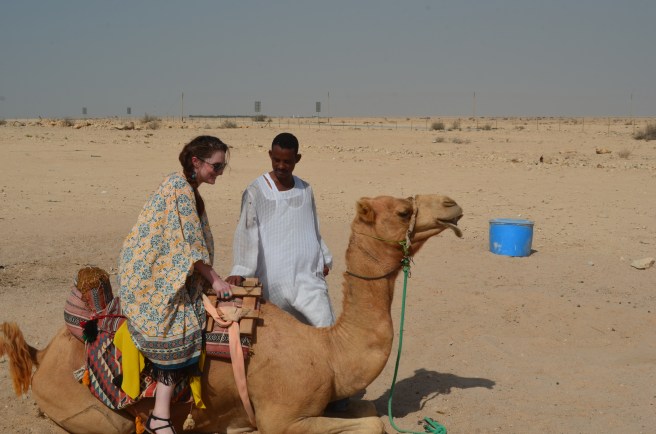
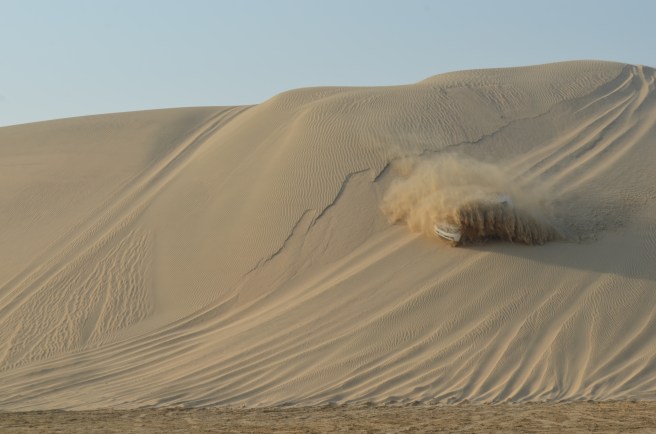
Final thing to do (but you can do it anywhere in the ME) – Ride a camel of course! There is no desert without camel rides so hope on. Lots of cool opportunities to do so, and also catch a wave on a sand dune while you are at it.

DSC_0376

DSC_0231

Hanging out with TeamCoCo

conan

Did I mention I had the best job in the world? When I say I ‘deployed’ many assume I did what is seen on CNN – holster a gun, lead convoys, exchange small arms fire with the enemy and occasionally maneuver around an IED attack. Or actually, since I am in the Air Force, I should probably fly a plane and drop bombs for my day job.

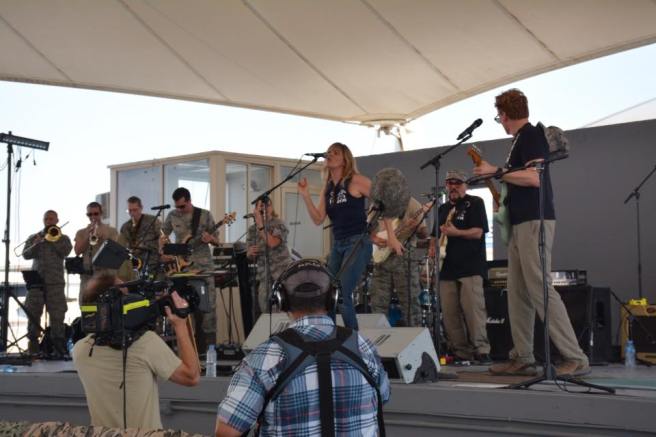
Although I have friends that do all of the above, I got to do quite the opposite side of spectrum – work USO type events in an effort to regenerate our workforce. It meant I got to spend 6 months thinking of creative ways people could have fun (think concerts, card games and cardboard water relays) to decompress in an often stressful, high-paced work environment. This is my dream job – party planning, for a living.

Although I could throw a really sweet event, one aspect of the job that I had never done before was to work with the entertainment industry to host large scale concerts (think 1K+ people). I learned what a tech rider was, how to book a well-known artist and how much it really costs to do so. As I often told people, ‘they never taught me how to do this in officer school’.

Out of all the crazy stories I could tell from doing this job, the pinnacle of my 6 months in Doha was hosting the First Lady of United states (FLOTUS) and taping a live Conan O’Brien show.behind the scenes

I had 10 days notice. FLOTUS would be in town speaking at a conference encouraging women in STEM and wanted to swing by the base for a morale visit. She wanted to spend time with a small group of Airmen and then bring out an artist to entertain the base population – so she called Conan O’Brien.

I’ll spare you the prep work details, the lack of sleep, security concerns involved and speed forward to picking up the head producer, writers, talent manager and camera crew from the Doha airport. While they flew via ‘normal’ first class tickets, Conan got to come a day later via Air Force one with the First Lady.

Having skipped the normal paperwork procedures, (I normally needed a minimum of 30 days to process customs paperwork through the Qatari government) we started off the evening stuck at the entrance of Al Udeid Air Base, which is wholly owned by the Qatari government; a political stance we were reminded of while we waited for over two hours while foreign guards went through every piece of video equipment.

Normally I have a fairly negative stereotype of anyone who is part of the industry of L.A., let alone a group of people who by all accounts were famous and successful in the industry. Having this stigma on my mind, I was pleasantly surprised by the entire groups calm nature, patience and general pleasant company – keeping in mind that they also had 10 days notice on this trip and hadn’t slept in 24+ hours. It was at this point I started to realize I was with a truly great group of people; given a unique opportunity to peak under the curtain of the entertainment industry.

And what I saw was a dedicated team of professionals who were able to come-up with funny, situationally-appropriate material in under 24 hours. Later I learned the short timeline was something the team was used to; being a daily show, your best or worst show only lasts for 24 hours or until your next show. So if you mess up, no big, yet if you go big and win, the reward is short lived. This, to me, allows for great creative writing where you constantly have to reinvent yourself to maintain entertaining material. What was more refreshing is that they didn’t care what the local leadership thought of their oh-so-true-to-the-Deid jokes.

Show time

Getting as much B-roll as possible the day prior, I went with the head producer + driver to transfer Conan from the First Ladies team of White House staff to Al Udeid Air base.

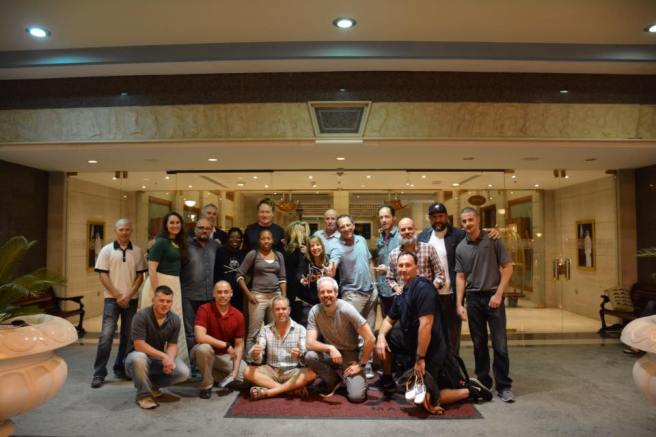
Little known fact (well maybe just by me): Conan actually went to Harvard and is pretty much hilarious all the time, but amazingly, can still have a normal, serious conversation. Hanging out with the Conan O’Brien + team is like hanging out with an old group of friends. The guys had been working together for nearly 20 years, and it shows. Rather than feeling like the guy that just showed up 20 minutes ago, you feel like you were with them all along.

 Side note: It is interesting to see how dynamics change when you have access to someone famous. I chose to hook-up a friend as the driver who was a fan, but in doing so pissed off another friend. Not without good reason, but was another lesson learned; things change when you have exclusive access to someone famous. You suddenly become either more or less desirable depending on what people want and who you chose reward.

Behind the scenes with Conan O’Brien? Like working with a well-oiled machine that felt both refreshing and comforting all at the same time.

The clips in the below link  show pretty much everything to the trip. To the many selfies, excited troops and quirky moments that make up filming in both the challenging environment of the desert and a foreign military installation.

http://teamcoco.com/video/conan-entertains-the-troops-at-al-udeid-air-base

group


A peak under the Abaya

As a part of a volunteer program between the US base and the embassy, I was able to participate in an exchange program with Qatar University. A group of women met weekly at the university to practice conversational English. The program was helpful for both the students and the military women as it gave an unguarded ability to have a conversation with people from such a drastically different culture.

For my first visit I was instructed to enter on the women’s side of the library. Qatar University is a traditional school where classes are separated by sex, down to the library where male and female floors were designated (and included long robed female guards, although I am sure chaperone would probably be a more appropriate word). Riquyana, our main student, met us for coffee and escorted us up to the ‘American corner’ of the women’s side of the library.

There I met several other ladies attending the college and learned of their subjects of study as well as university life. All students still live at home while attending the university. Many of them have a driver that drops them off for classes (although my favorite girl that I met, Hen, was Sudanese and drove herself around). Additionally, the ladies came from all nationalities, but all spoke Arabic fluently (despite all classes being in English and modeled after an American curriculum).

Riquyana was from Pakistan, wore an abaya and was studying political science. Her sister, also wore an abaya and was one of the first students studying a new subject to the university, Public Health. Hen was Sudanese studying international relations; she had volunteered extensively with the UN and often worked internationally advocating for womens rights. She dressed just as I would expect any normal western 20-something-year old to wear with no head dressing, mainly jeans and a t-shirt. Jazzi was born Qatari studying political science and probably the most liberal, young Qatari women I had met. Although she wore an abaya she often left it open when walking in public with us, only feigning some conservative cover up when passing local men.

The rules Jazzi had to follow compared to the other non-qatari women was fascinating. She could not be seen in public smoking shisha (hookah), or at any establishment that served alcohol (although she herself did not drink). Dating meant something totally different entirely. If a gentleman was interested in dating her, he had to ask her family for permission first. Upon agreement, the couple had a year of dating to decide if they wanted to marry one another. If either at any point decided they were not favorable, it was easy to break the potential union off. I have to say, in our current error of casual dating (and sex) this formal courtship seemed a bit refreshing to me; dating in the US has certainly swayed far from its original intent of gauging potential for marriage..

Jazzi had dated a prince previously, and had a position at one the ministries in the government waiting for her once she graduated. Being Qatari, it was easy to see the subtle differences on her wealthy life compared to the other ladies she was friends with.

Yet, although Hen of upper middle class Sudanese decent, would probably not marry a prince or have a high-brow job waiting for her when she was complete with her studies, she had a lot better gig than the rest of the girls. She was completely secular, could come meet us out at one of the western hotels for a drink or show us her favorite shisha spot. Her other close friends were outspoken journalists, very critical of the lack of free speech found in the state of Qatar. If I didn’t know it, I would have thought they were all American university students (and indeed looked at the states as an ideal place of freedom).

Other than these two extremes, the girls had a lot in common with young women from around the world. They were on facebook, had twitter, Instagram, and snapchat. Jazzi even had pictures on her Instagram of her hair down and showing, which she didn’t seem to think was violating any of her conservative customs. They were all bubbly, boy crazy and fun, with the whole world in front of them and encouragement of society to reach out and grab it. 

What did I learn about Arabic women after drinking coffee with them, sharing dinner and being invited back to their homes?

They are a diverse, intelligent, have varying belief systems and lifestyles depending on their heritage and are a lot more liberal and ‘with’ modern society than the clothing they choose to wear in public. The western world tends to see the Middle East, especially when it pertains to women’s rights, as one monotheistic culture when in fact it is one large melting pot of traditions and Islamic nuisances. Next time you see a women fully garbed in a traditional abaya, ask yourself, how much do I really know about her?


An OCN for the Day

= Other Country Nationals (formally known as TCNs or Third country nationals – other country nationals was deemed more PC).

image

Picture: OCN worker in Iraq courtesy of https://en.m.wikipedia.org/wiki/Third_country_national

OCNs are the backbone of the workforce in Qatar, and for much of the wealthy Middle East (UAE, Kuwait, Bahrain, etc.). Qatari’s do not fight in their own military, drive their own cars, do their own laundry or cook their own food. They have an infinite stream of people (mostly men) pouring into the country looking for opportunities to make living (all of which is sent back to support their families in varies developing nations in the orient).
This workforce is not limited to the country of Qatar, it also exists on nearly every military installation in the Middle East. Varying in scope, Al Udeid (a large Air Force base in Qatar) has one of the largest populations of contracted outside workers. With the sheer size of military operations, the government contracts out a significant portion of its support services as it cannot sustain regular ops of that magnitude for things like food, construction, cleaning, MWR and other basic services.
Many have heard of the controversial deaths incurred while building the massive stadiums for the upcoming World Cup games. In fact the Qatari government has made marked improvements to help improve the conditions of the workers sweating in unbearable heat on top of sky scrappers. Even with some of these improvements, however, treatment of workers in Qatar that are either non-western or non-Arab are still sub-par at best.
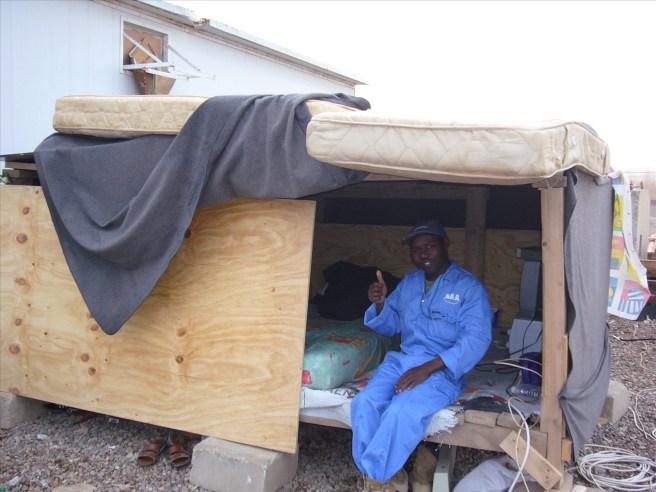
Qatari law dictates that in order for a company to sponsor you over to Qatar to work, they must also provide housing. This is not a bad deal except that those same rules do not provide standards for housing conditions. Nearly all the OCN workers live in large compounds with 4 or more to a room (dubbed ‘man camps’ by the US military). They work at least 6 days a week (many of the workers I spoke with work a month before getting 1 day off) and make a minuscule amount of money, summing somewhere around $300 a month depending on the job.
Probably the most shocking practice is the confiscation of passports by the contract owner. The company gives generic reasons for doing this, but I cannot think of any other reason than power over their work pool. By doing this, they control when (if) they can leave the country. They also control contract hoping for better wages. While I use the word ‘worker’ to describe many of these laborers the translation in Arabic is closer to servant or slave. In restaurants you will also see signs that bar these same people from entering, which is clear and even expected, discrimination (not that they could afford to eat out or have a drink in a western hotel). This practice is known, has been written about and still remained largely unchanged despite protests from the international community.
Yet the stream of workers continues to flow. Many of the workers I met on the base were highly educated in their home country including lawyers and doctors. Regardless of their education, they still made more money working in the Middle East than they did practicing their trade in countries such as Sri Lanka, Nepal and the Philippines.

Unlike the US there is also no path to citizenship. You could be born in Qatar, have lived in Qatar for 30 years and established your entire life in the country, but you will still never be Qatari. You will also not enjoy the same rights, privileges and social status of a Qatari. You will be treated differently depending on what nation you are originally from (UK/US seem to be at the top of the tier with Nepal, Sri Lanka & Filipino being some of the lowest). You could speak fluent Arabic, be Muslim and wear an abaya – but it is does not matter. To be Qatari means you descend from a certain bloodline that can be traced back a few hundred years.

I had the pleasure of meeting a few University students who originally were from Sudan. Although they grew up in Doha, went to Qatar university and spoke fluent Arabic they did not consider themselves Qatari and were in fact very critical of the country and the native born Qataris. They reinforced the believe that immigrant workers are in fact the only thing propping up the wealthy country.

Learning the conditions that these people lived and worked in completely shocked me, especially when I learned it didn’t matter if they were contracted by the US government or the Qatari government. There is a  clear divide between the extreme rich and poor. The two groups of people live and work in two totally different worlds with the differences being so starkly obvious: one with Dior sunglasses, red bottom shoes and a land cruiser with driver – and the other – soiled work suits in mass buses with no air conditioning (provided by their employer only to bus their workers to and from work). There were so many workers hitchhiking on the side of the roads trying to get to A to B or running walking across the five lane highway system.

The western world is not without its issues, however, this kind of extreme exclusivity to wealth is still hard for me to accept as ‘simply part of the culture’. When it is so institutionalized as it is in both overseas military operations and in Middle Eastern countries, and you have a limited amount of time and resources, how do you change it?

camel racing

It was a day at the races for the Qatari’s, which since we are talking about a race in the middle of the Desert, involved camels. Yes ladies and gentlemen I went to a camel race and lived to tell about it

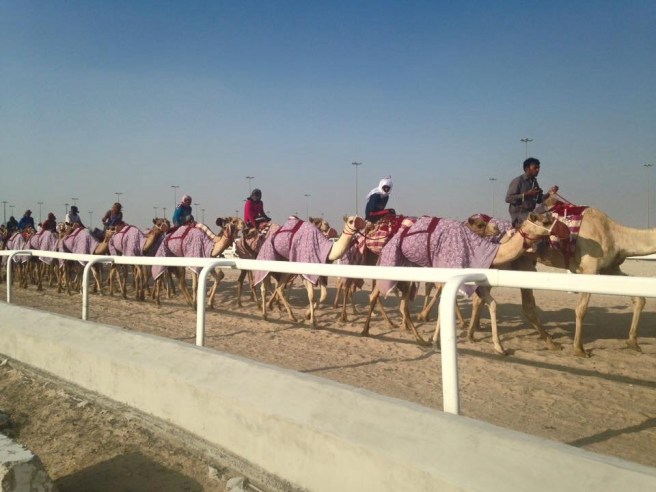
imageThe experience itself was so quintessentially Qatari – it is ironic really. First take everything you know about horse racing and throw it out the window; in the world of Middle Eastern camel racing there is no gambling, actual jockeys, booze (of course), mass crowds with fancy hats or really very many spectators. The races last for about 15 minutes and get this – you race next to the camels in a 4×4 truck.
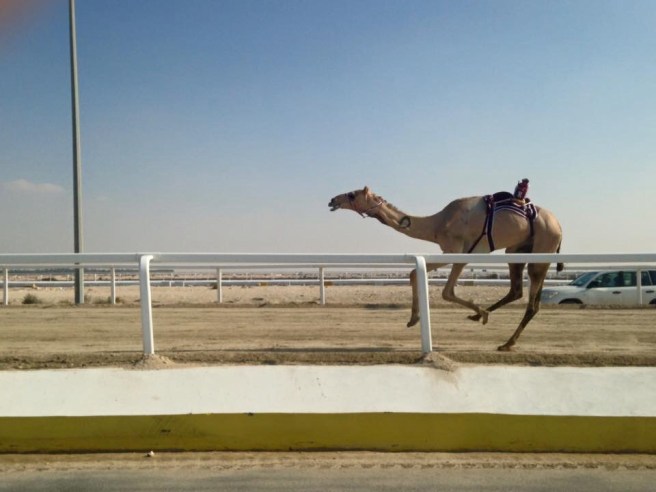
This is probably the coolest difference between horse racing and camel racing – actually racing next to the action. While we were spectators, the locals ride next to ‘their’ camel. Every camel in the race is owned by a Qatari. Rather than having a jockey that ensures the camel knows where they are going, they have a ‘monkey’ aka an electronic whip that the owner controls. As the race nears to the end, the owners try their best to get their unmanned beast to be the first to finish. While there are no cash prizes for any of the race wins, the larger races do a have a ‘consolation’ prize of a Lamborghini for first place and a Mercedes for 2nd and 3rd. Not bad for a race that doesn’t accept betting.

imageA camel itself costs upwards of $1M riyal or about $350K and is in its best racing age at 5. Previous to mechanical technology, a 5 year old child used to be the lucky individual atop of the camel. The practice has since been banned as inhumane (surprisingly).
Having gone to the Grand National, as well as my fair share of small town races, I have to say camel racing pales in comparison. I am sure it is fun for the few rich individuals that can afford to race their $350K camels for a Lamborghini, but for the rest of us commoners, it is downright boring. How do you have a race that you can’t drink or bet on? It is definitely not American and would have zero chance in England.

In so many ways this is what I have discovered about the Qatari culture. They have similar attempts at typically western events, but nearly all of them leave you feeling like it is a cheap (but more expensive) imitation of the real thing.

Drinking in general is a good example of this. There are places to drink, but it is only allowed in hotels. Who finds the hippest places in hotels? Drinks are overpriced, music is imported and the atmosphere is that of an expensive hotel trying to be cool. They aren’t bad, but nowhere close to the nightlife scene you would expect in a capital city.

With the ever expanding would of newly oil-rich nations, who knows what is next for camel racing. But I can tell you – the only race I will be watching in the future will be one where I can watch ‘my horse’ race to the top.

How Different are We

One of the first opportunities I got to go off base was to one of most impressive malls I have ever seen, the Villaggio. Modelled off the Venetian in Vegas, this massive indoor mall is a clear attempt to bring blue skies and moderate temps to a place that will never have either.
The interior has a river running through the middle where you can take a gondola ride past H&M, Sephora and array of western beauty and clothing shops with titles written in both English and Arabic. After closing my jaw at the pristine floors, high ceilings and impressive architecture, I ran immediately to the most western thing possible, Starbucks.
To my surprise there was a long line of mostly locals dressed in traditional Hajib/abaya (black covering women wear in public) and Thobe (white long robe men wear). Each ordered their respective coffees in English, to a cashier that was not Qatari and did not know a lick of Arabic, then promptly sat down to join their respective friend groups.

This scene alone sums up Qatar in so many ways and at the same time boggles the rational mind. The word Starbucks and Middle East should never be in the same sentence.

Public attire seems to be the most obvious difference between what one would expect to see at Starbucks in any other region of the western world vs. the Middle East. The man’s Thobe seems generally practical for the heat of the area. It is white, provides sun coverage, is airy and light. Little known fact – the black top of the headdress worn by men was actually used to tie up camels when Bedouin tribes still existed on this arid peninsula.

Then there is the Hajib and abaya. A controversial garment by western standards, it is perceived to be a physical sign of how limited women are in Arab culture. Being a women myself, I must admit that simply looking around in public makes me question how much freedom women actually have in the State of Qatar. With the oppressive heat, the black abaya’s the locals have draped around their bodies and face seem like an unnecessary layer of sweat induced silk. Some think that this is what the women wear all the time when in fact it is only around mixed company.

The base I am currently stationed at has a list of clothing requirements for everyone, but are considerably more critical of the small percentage of women. No sleeveless shirts, no short shorts, bikini’s must cover appropriate areas and conservative clothing is always preferred. With how many rules, judging eyes and critical thoughts seem to go towards what women wear, abaya’s are seeming more and more appealing. You wear what you want with your girlfriends, then just put on a silky robe when in public. No judging eyes to worry about.

It is a misconception that these traditional forms of dress are somehow mandated by the Quran, when instead it is history that has kept this tradition alive. Many cultures in the Middle East have been conquered over and over again – one of the traditional ‘rewards’ of war were the women of the area. As a measure to protect their women, conservative dress not only became standard practice, but began to be tied to how pious you were. As there is no descintion between culture and religion, law and religion entites from two different sources tend to be associated with one another and blend over time.

Many westerners find the intertwining of religion with state law confusing and restrictive. Yet, we seem to forget that we lived under similar laws not so long ago. Europe was strong in its ties between the Christian crown and its state religion, in the fact the UK still holds onto its anglican ties. The United States is the only western country that never tied the two together, being still a new culture and concept compared to the 2,000+ years of history Iraq, Iran and Saudi Arabia, hold over much of the world.

One thing is for certain, our fundamental values seem to be at complete odds with each other. The very principles that the Middle East supports, America was founded to change. In Qatar, and much of the Arabian Peninsula, your family name matters. Where you were born, matters. How pious you are/appear in public, matters. Everything you are and everything you will be able to achieve is based on what family you come from. The individual is not important. The family unit is above all things. Arranged marriages are still practiced and accepted. Blood lines must be kept pure.

From an Americans eyes it is easy to judge based on these external facts. Why can you not be your own person, define your own destiny? The effects of my actions, will either bring me success or failure, but these are my burdens to bear.

But are they?

To some extent, despite all our efforts, we are still defined by where we come from. How many of your friends climbed the social ladder? Moved from the Projects to middle class suburbia? Are you the first generation in your family to go to college, get a white collar job? In some cases I would hope the answer would be yes, but I have found that I get the answer ‘no’ more often than yes. Despite the fact that the ‘American Dream’ is in fact possible, we are still very much defined by where we come from more than we would like to admit.

So this of course begs the question, how different are we?

6 months in Doha: Day 1

I was told earlier this year that I would get tagged for my first ‘deployment’ to the Middle East. Seemingly perpetually lucky in my life, I didn’t get Iraq or Afghanistan, but one of the largest main operating bases (MOB) just outside of Doha, Qatar.

As far as deployments go, my experience will be completely none standard – and definitely something you won’t hear broadcast on CNN reports or in ‘support the troops’ ads. This is not because we don’t work like crazy at MOBs, but because the threat level is low enough that we are allowed to have a few drinks, go off base and even get rare glimpses into the extremely interesting culture – and rising regional power – of Qatar. My first experience in my new Arab home, was that of the harsh weather conditions. As I stepped off the contracted aircraft into the July sunlight of the flightline (and into my new home for 6 months), I was immediately thankful I had taken the advice of those before me and had sunglasses on hand. I was also mentally prepared for the heat, although nothing can realistically physically prepare you.

The first few days I felt I could handle it – even had ambitions of walking everywhere even though I am one of the lucky few who has a car. It indeed feels like a hot hair dryer blowing on you constantly – which honestly was way better than the still, non-existent wind days. Sand storms are another pest – those traditional Arab scarfs are not just for show! I have heard it actually gets cool here in the winter months, however, it’s hard for me to believe that while I sit inside, in air conditioning and still manage to break a sweat. It is simply a fact of life here – sweat is part of your everyday. 150 degrees has been the average high, with the evening temp getting no lower than 90.

I entered Qatar at the time of Ramadan. Those familiar with Islamic cultural will know – it is a about a month period where Muslims do not eat or drink while the sun is up (a seemingly impossible feat when out in the draining sun all day – not even water is supposed to be consumed). I was reminded the instant I landed on ground that I was in fact, not on a US installation, but a Qatari one (and one that the Qatari’s like to periodically remind us of) – and therefore had to abide by the rules of the country (not just religious law, but actual law) – no eating or drinking in public for me either.

After making it through the long lines of Qatari immigration, I finally stepped foot into the military compound, greeted by my completely burned out replacement. “You are going to have a great time here” she said. It was then when I learned my new job for six months – booking bands, running the bars and ensuring we do everything we can to keep to moral of hard working troops as high as possible. I’ll take it!

Let the adventure begin.

Viva Ibiza

DSC_1034

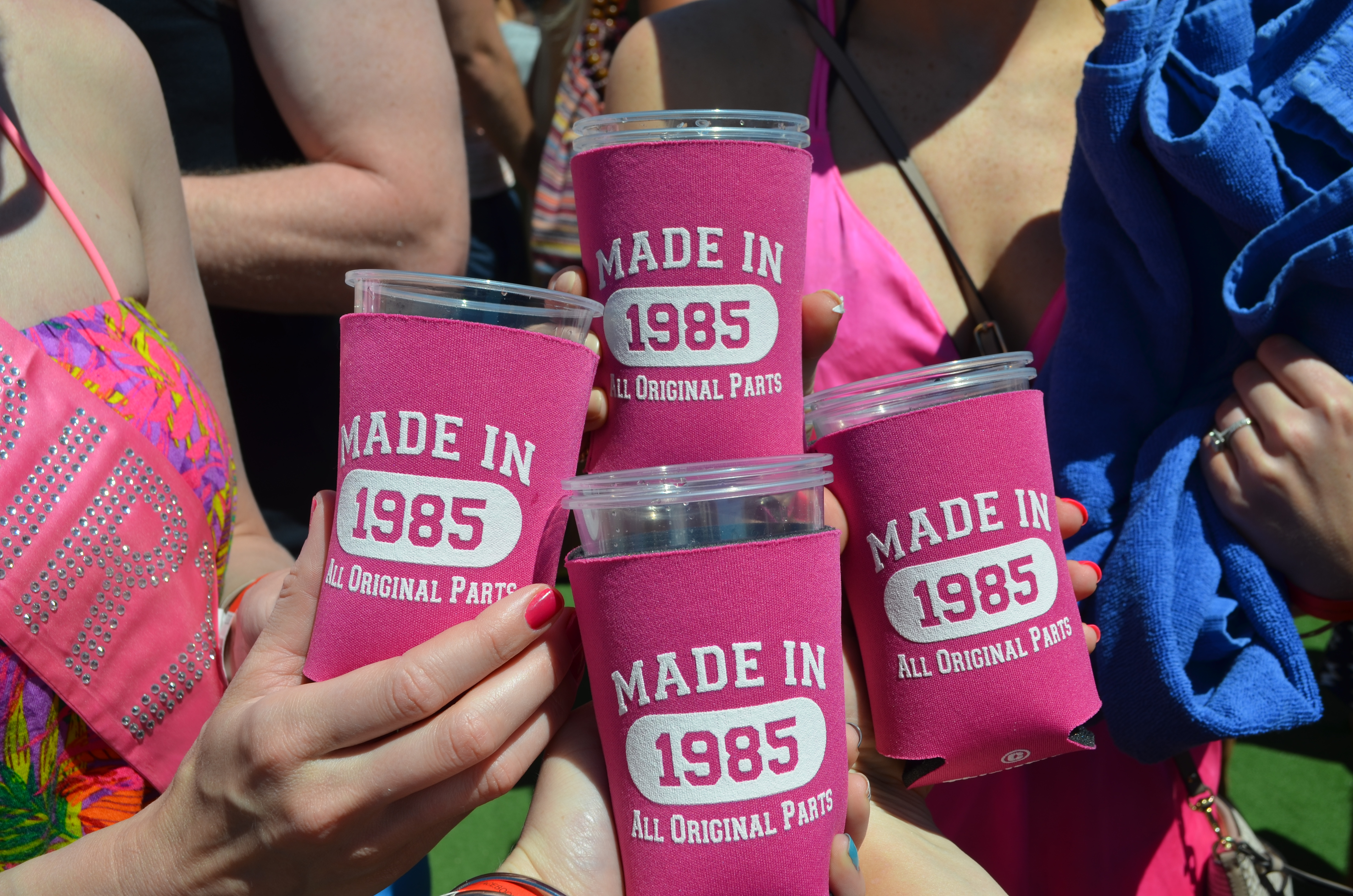
There are times in your life when you are slowly approaching an age when you shouldn’t really be seen doing certain things anymore (at least not by American standards). Partying all night in Ibiza would be one of those said activities…so why not as a last stitch effort to grasp the last few hours of your youth, go there for your 30th birthday?! (not mine of course, I have a few years left before I am forced to be responsible)

Partying in Ibiza has an infamous reputation for being not only fun, but spring-break-style crazy. I can say we checked all the boxes: 1  – Partied VIP style @ Pacha night club – to David Guetta; 2 – Watch the sun come up whilst reveling at the night you just had; 3 – Day drank aboard a 20-something party boat; 4 – Nursed David Guetta hangovers poolside, margarita in hand

The verdict? As a now seasoned party goer of nearly a decade (ug that’s when you know you should switch to water), Ibiza is as crazy as you want it to be. As is so many ‘party’ type events, you really make the party along with the people you are with. We stayed in Playa d’en Bossa at one of the luxury resorts (highly recommend – all inclusive and reasonably priced), however, old town Ibiza is stunning and has a lot more character.

We were also afraid of being the ‘oldest’ people there, but by far we were not. Lots of topless Spanish families donned the beaches making certain areas of Ibiza feel more like a family friendly place than this drug induced hipster island. Another highlight was the hippie market, which boasted hand crafted items from artists all over the island.

Looking at an epic trip to the island of sin? (as my father loves to refer to it) Below are some helpful links/tips:

http://www.ibiza-spotlight.com/night/ibiza_virgins_i.html

– Do go VIP – like everything else, you get what you pay for

– Do explore old town

– Do dress to impress, this is Ibiza afterall

DSC_1051